

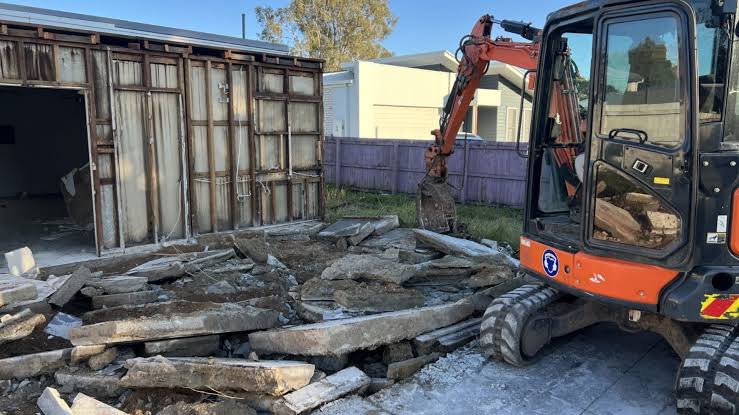
Construction projects in Brisbane are becoming more complex as developers, contractors, and infrastructure managers place greater emphasis on workplace safety, environmental compliance, and project efficiency. Traditional concrete removal methods such as jackhammering and mechanical demolition have been widely used for decades, but they often generate significant dust, vibration, and noise that can affect workers, nearby businesses, and surrounding communities.
As a result, many construction sites are turning to hydro demolition—a high-pressure water technique that removes damaged concrete and coatings with greater precision while significantly reducing airborne dust.
What Is Hydro Demolition?
Hydro demolition uses ultra-high-pressure water jets to remove deteriorated concrete, surface coatings, and damaged material without relying on heavy mechanical impact.
Unlike conventional demolition methods, the process selectively removes weakened concrete while preserving sound concrete and reinforcing steel beneath the surface. This makes it particularly valuable for bridge rehabilitation, industrial facilities, car parks, tunnels, water infrastructure, and commercial construction projects.
Its precision helps minimise unnecessary damage to surrounding structures.
Reduced Dust Creates A Safer Workplace
Concrete dust can present health and safety challenges on construction sites, particularly during large-scale demolition work.
By using water instead of mechanical impact, hydro demolition significantly reduces airborne dust particles during concrete removal. This contributes to cleaner work environments and may help improve visibility and overall site conditions.
Many contractors choosing dust-free concrete and coating removal services Brisbane value the improved workplace conditions alongside the operational benefits of the technology.
Cleaner work areas can also reduce post-project cleaning requirements.
Lower Vibration Protects Existing Structures
Mechanical demolition methods often transmit vibration through surrounding concrete, increasing the risk of micro-cracking or unintended structural damage.
Hydro demolition removes deteriorated concrete without generating the same level of impact, making it well suited to projects involving bridges, heritage buildings, industrial facilities, and structures requiring careful preservation.
Protecting sound concrete has become an important objective in modern infrastructure rehabilitation.
Improved Surface Preparation
One of the major advantages of hydro demolition is the surface it leaves behind.
The process creates a textured, clean concrete profile that provides excellent bonding conditions for repair mortars, overlays, waterproofing systems, and protective coatings.
Better surface preparation can improve the durability and long-term performance of repair work.
Supports Environmental Objectives
Environmental management is becoming an increasingly important consideration across Brisbane construction projects.
Because hydro demolition reduces dust generation, it can help minimise the spread of airborne concrete particles into surrounding areas. With appropriate containment and wastewater management systems, contractors can also manage water and concrete slurry responsibly to meet environmental requirements.
This makes the method suitable for projects in urban areas where dust control is particularly important.
Suitable For Complex Infrastructure Projects
Hydro demolition is commonly used across a wide range of applications, including:
- Bridge rehabilitation
- Multi-storey car parks
- Water treatment facilities
- Industrial plants
- Marine structures
- Commercial buildings
- Highway and transport infrastructure
Its ability to remove damaged concrete accurately without affecting surrounding structural elements makes it valuable across many different construction environments.
Worker Safety Remains A Priority
Modern construction practices increasingly focus on reducing workplace risks wherever possible.
By minimising dust and reducing the need for heavy mechanical impact, hydro demolition can contribute to safer working conditions when combined with appropriate safety procedures, equipment, and site management.
Safer work environments benefit both construction teams and nearby occupants.
Long-Term Value Beyond Initial Costs
Although hydro demolition may involve specialised equipment and planning, many project owners consider the long-term benefits worthwhile.
Accurate concrete removal, reduced structural damage, improved repair bonding, and cleaner work environments can contribute to more durable repairs and potentially lower future maintenance requirements.
Looking beyond initial project costs often provides a clearer understanding of overall lifecycle value.
Helpful Related Construction Research
Construction professionals may also benefit from reviewing bridge rehabilitation techniques and sustainable concrete repair methods, as these topics provide additional insight into extending infrastructure lifespan and improving repair quality.
Final Thoughts
Dust-free concrete removal methods are becoming increasingly popular across Brisbane construction sites because they offer practical advantages over traditional mechanical demolition techniques. Hydro demolition combines precision, reduced dust generation, lower vibration, and excellent surface preparation, making it well suited to infrastructure repairs, commercial developments, and industrial maintenance projects.
As construction standards continue evolving, many contractors are adopting advanced removal technologies that improve safety, protect existing structures, and support higher-quality long-term repair outcomes.
