

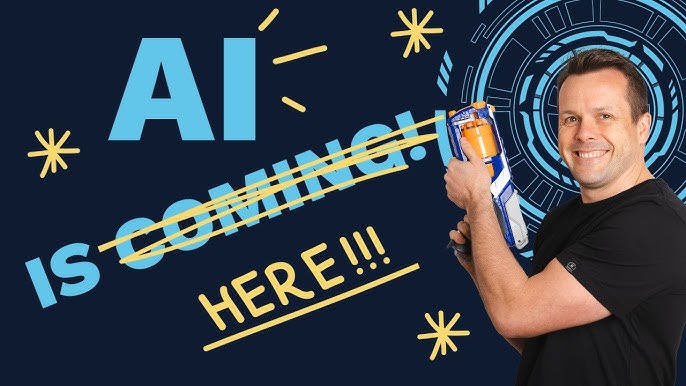
Artificial intelligence is no longer a futuristic concept reserved for large corporations with massive budgets. In 2026, AI has become a practical, accessible, and deeply integrated part of how small businesses operate, compete, and grow. From marketing automation to customer service, from financial forecasting to compliance support, AI is reshaping almost every function inside a modern business.
For small business owners, this shift is not optional. It is structural. Businesses that adopt AI effectively are becoming faster, leaner, and more competitive. Businesses that ignore it are increasingly struggling to keep up with rising customer expectations and operational complexity.
Even foundational elements of business setup, such as choosing a registered business address, are now influenced by AI-driven systems that streamline verification, compliance checks, and digital onboarding processes.
This article explains how AI is transforming small businesses forever, what changes matter most, and what every entrepreneur needs to understand to stay competitive.
The Rise of AI in Everyday Business Operations
AI is no longer limited to advanced research labs or enterprise software systems. It is embedded in everyday tools that small businesses already use.
Email platforms now suggest responses automatically. Accounting software categorizes expenses using machine learning. Customer support tools handle inquiries without human intervention. Marketing platforms generate content, analyze performance, and optimize campaigns in real time.
The key shift is not just automation, but intelligence. Systems are no longer just following instructions. They are learning patterns, predicting outcomes, and improving decisions.
This allows small businesses to operate with a level of efficiency that was previously only available to large organizations.
Why AI Matters More for Small Businesses Than Large Ones
It may seem like AI benefits large corporations more, but in reality, small businesses often gain more relative advantage.
Large companies already have established systems and processes. Small businesses, on the other hand, can integrate AI from the ground up.
This means they can skip outdated workflows and build modern, efficient operations from the beginning.
AI also reduces the need for large teams, allowing small businesses to compete with fewer resources.
In many cases, a small team using AI tools can outperform a much larger team that relies on traditional methods.
AI in Marketing and Customer Acquisition
One of the most significant areas where AI is transforming small business is marketing.
AI tools can now analyze customer behavior, identify target audiences, and optimize advertising campaigns automatically.
Content creation has also been transformed. Businesses can generate blog posts, social media captions, and ad copy in seconds, then refine them based on performance data.
Email marketing has become more personalized, with AI predicting what type of message each customer is most likely to respond to.
This level of precision was previously impossible for small businesses with limited budgets.
Now, even a small startup can run highly targeted marketing campaigns with professional-level accuracy.
AI in Customer Service and Communication
Customer service is another area experiencing rapid transformation.
AI-powered chatbots and virtual assistants can handle common customer inquiries 24/7 without human intervention.
These systems are not just rule-based anymore. They can understand context, detect intent, and provide relevant responses.
This reduces response times, improves customer satisfaction, and allows human teams to focus on more complex issues.
For small businesses, this means being able to offer enterprise-level customer support without enterprise-level costs.
AI in Financial Management and Decision Making
Financial management is one of the most critical aspects of running a business, and AI is making it significantly easier.
Modern accounting tools can automatically categorize transactions, detect anomalies, and generate financial reports.
AI can also forecast cash flow, helping business owners make better decisions about spending, investment, and growth.
Risk analysis has improved as well, with AI identifying potential financial issues before they become serious problems.
This level of insight allows small business owners to make more informed decisions with greater confidence.
AI and Business Compliance Systems
Compliance is often one of the most complex and time-consuming aspects of running a business.
AI is now helping automate parts of this process by organizing documentation, tracking deadlines, and ensuring regulatory requirements are met.
Even foundational business setup decisions, such as selecting a registered business address, are increasingly supported by AI-driven verification systems that streamline onboarding and reduce administrative friction.
This creates a smoother experience for entrepreneurs who want to establish their businesses quickly and efficiently.
AI in Product Development and Innovation
AI is also changing how businesses create and improve products.
By analyzing customer feedback, usage patterns, and market trends, AI can identify opportunities for new features or improvements.
This reduces guesswork and helps businesses build products that are more closely aligned with customer needs.
Small businesses can now iterate faster and respond to market changes more effectively than ever before.
Innovation cycles that once took years can now happen in months or even weeks.
The Impact of AI on Hiring and Team Structure
AI is also reshaping how small businesses hire and manage teams.
Recruitment tools can screen candidates, analyze resumes, and even conduct initial interviews.
This reduces hiring time and improves candidate matching.
Internally, AI tools help manage workflows, assign tasks, and track productivity.
As a result, small businesses can operate efficiently with smaller teams while maintaining high output.
This shift is changing traditional business structures and creating more flexible organizations.
The Risk of Over-Reliance on AI
While AI offers many advantages, over-reliance can create new risks.
Businesses may become dependent on automation and lose human judgment in decision-making.
There is also the risk of generic output, where content or communication becomes too standardized and loses authenticity.
Data privacy and security are additional concerns, especially when handling sensitive customer or financial information.
Successful businesses use AI as a tool, not a replacement for human thinking.
AI and Competitive Advantage in Small Business
AI is quickly becoming a competitive necessity rather than a luxury.
Businesses that adopt AI early gain speed, efficiency, and insight advantages over competitors.
Those that delay adoption risk falling behind in customer expectations, pricing efficiency, and operational performance.
In highly competitive markets, even small improvements in efficiency can lead to significant advantages over time.
AI is effectively leveling the playing field between small and large businesses.
The Role of Physical and Digital Infrastructure
Even in a highly digital world, physical and legal business foundations still matter.
Elements such as a registered business address remain essential for legal compliance, business credibility, and official correspondence.
However, AI is now streamlining how these elements are managed, verified, and integrated into broader business systems.
This combination of physical structure and digital intelligence creates a more efficient business environment.
The Future of Small Business in an AI-Driven World
The future of small business will be defined by integration with AI rather than replacement by it.
Businesses will rely on AI for data processing, automation, and optimization, while humans focus on creativity, strategy, and relationship-building.
This hybrid model will become the standard across industries.
Small businesses that adapt early will have a significant advantage in scalability and efficiency.
Conclusion
Artificial intelligence is fundamentally changing how small businesses operate, compete, and grow. It is improving marketing, customer service, financial management, compliance, and decision-making in ways that were previously impossible without large teams or budgets.
Even foundational business elements such as a registered business address are now part of a more automated and intelligent ecosystem that simplifies operations and improves efficiency.
The most important takeaway is that AI is not replacing small businesses. It is empowering them.
Those who learn to integrate AI thoughtfully will build faster, smarter, and more resilient businesses in the years ahead.
FAQs
How is AI helping small businesses today?
AI helps with marketing, customer service, financial management, compliance, and automation of daily tasks.
Do small businesses need AI to survive?
While not mandatory, AI provides a major competitive advantage in efficiency and scalability.
Can AI replace employees in small businesses?
AI can automate tasks but cannot fully replace human creativity, judgment, and relationship-building.
What is the biggest benefit of AI for small businesses?
Increased efficiency and the ability to compete with larger companies using fewer resources.
How does AI affect business setup processes?
It simplifies tasks like documentation, compliance, and even managing a registered business address.
Is AI expensive for small businesses?
Many AI tools are now affordable or even free, making them accessible to small businesses.
What is the risk of using AI in business?
Over-reliance, data privacy concerns, and loss of human personalization if not managed properly.
You should also read: TechAiTech
