

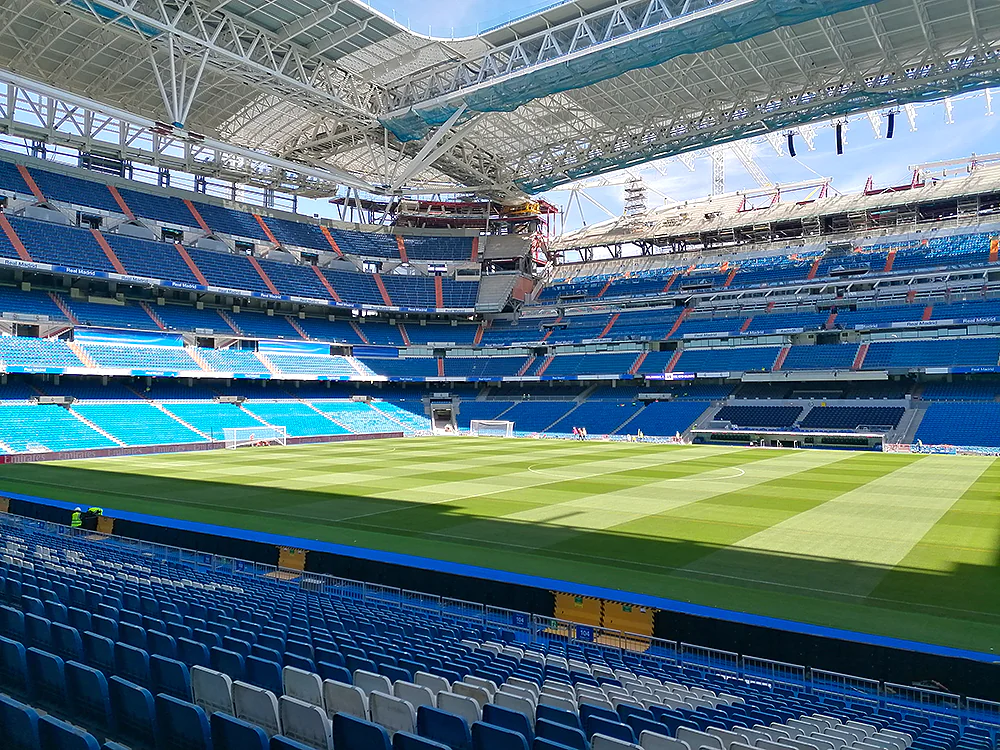
A stadium is usually defined by its physical structure—seats, lights, turf, sound systems, and roaring crowds. But modern sports culture has revealed something deeper: the most powerful stadiums often exist beyond physical walls. When millions tune into a 스포츠 중계, they collectively build an “invisible stadium,” a shared emotional arena where reactions echo across living rooms, cafés, offices, and online spaces. Without ever stepping inside a physical venue, viewers become part of a vast crowd, experiencing the same intensity, suspense, and unity as if they were seated shoulder-to-shoulder.
The Birth of a Stadium Without Walls
The moment a broadcast begins, the invisible stadium begins to take shape. It forms through synchronized attention—millions of eyes locked on the same screen, millions of hearts beating to the same rhythm. This collective focus creates an emotional architecture stronger than concrete. The invisible stadium transcends geography, compressing distances so that a viewer in Seoul, an expat in New York, and a traveler in Sydney all feel as if they occupy the same emotional space.
Crowd Energy Without Physical Crowds
Stadiums are known for their energy—the chants, the waves, the roar. But even without physical presence, viewers sense a similar charge. When watching a 스포츠 중계, they instinctively know that countless others are experiencing the same moment. Online chatrooms explode. Social media timelines flood. Messages appear instantly in group chats. These parallel reactions create a virtual roar, a digital crowd whose presence can be felt even in a silent room.
How Sound Design Replicates Stadium Emotion
Modern broadcasts intentionally recreate the stadium feel through sound engineering. Crowd noise swells during tense moments, commentary intensifies, and microphones capture the raw atmosphere of the venue. This auditory immersion tricks the brain into experiencing collective excitement. The sounds become emotional cues—moments when viewers’ hearts rise in sync with what they hear. The 스포츠 중계 merges physical and digital worlds to create an enhanced sensory environment.
The Living Room as a Mini-Stadium
Every living room becomes its own micro-arena. Snacks replace concession stands. Sofas become bleacher seats. Friends and family become cheering sections. Even solitary viewers participate—they gesture, shout, or lean forward instinctively. This transformation demonstrates that the stadium is not a place, but a state of mind triggered by collective engagement. Watching a 스포츠 중계 turns ordinary spaces into emotionally charged arenas.
Online Communities as Expanding Bleachers
Digital platforms amplify the invisible stadium by giving viewers a place to react collectively.
A burst of comments after a goal.
A wave of outrage after a controversial call.
A ripple of memes following a surprising twist.
These interactions expand the bleachers infinitely. The invisible stadium grows with every participant, stretching across continents, languages, and cultures. Through these digital reactions, the 스포츠 중계 becomes a global event rather than a local one.
Emotional Contagion Across Distance
Crowds influence emotion naturally—joy spreads, tension multiplies, anxiety echoes. The same phenomenon occurs digitally. When viewers notice others reacting intensely, their own emotions heighten. A single message—“Did you SEE that?!”—can amplify the excitement in dozens of homes. Emotional contagion travels faster than the broadcast itself. The invisible stadium becomes a living organism, pulsing with moods that shift collectively.
Shared Tension Creates Structural Unity
During high-pressure moments, stadiums become silent. The invisible stadium mirrors this perfectly.
• Chats go quiet.
• People freeze mid-sentence.
• Entire cities feel still.
This collective stillness creates unity stronger than chanting. Viewers sense the weight of the moment, and silence becomes the shared structure that binds them together. The 스포츠 중계 orchestrates these emotional waves with remarkable precision.
Victory and Defeat Echo Through the Invisible Walls
When a team wins, the invisible stadium erupts. Cheers erupt from apartments. Messages flood timelines. Fireworks appear outside. In defeat, the invisible stadium falls quiet—disbelief, frustration, or resignation creating a shared emotional gravity. These reactions prove that the stadium exists not only in physical spaces but in every viewer who participates emotionally.
Conclusion
The invisible stadium is one of the most extraordinary outcomes of modern broadcasting. Formed through shared attention, emotional contagion, digital expression, and synchronized reaction, it transforms lone viewers into members of a global crowd. A 스포츠 중계 is the key that unlocks this phenomenon—turning private spaces into communal arenas and forging unity across distance. In this way, live sports prove that connection is not dependent on location, but on shared experience.
