

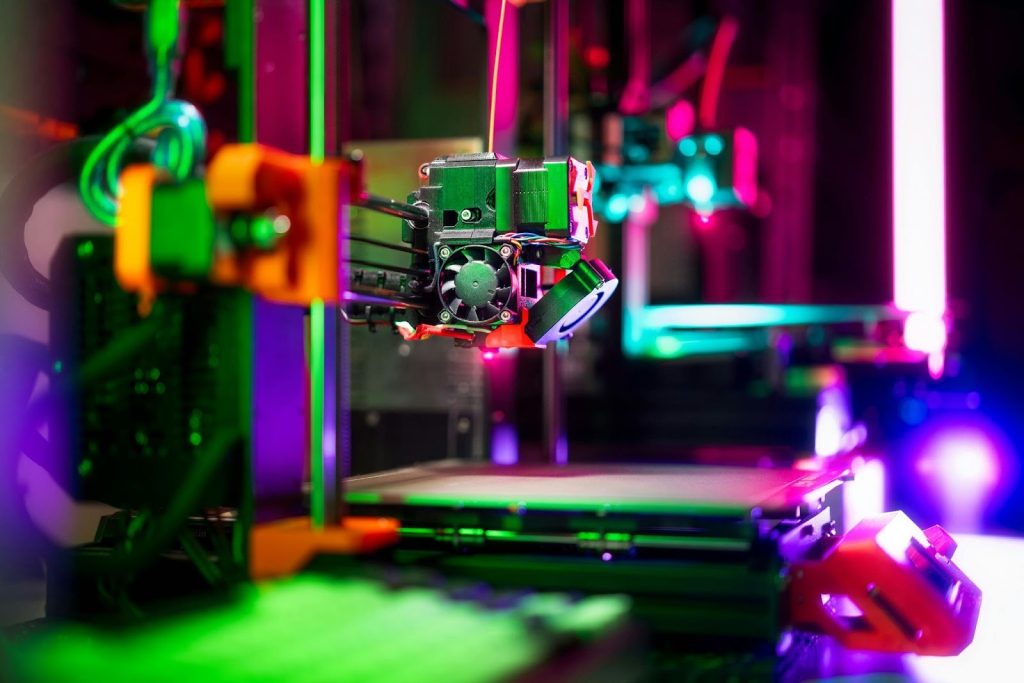
The promise of 3D printing is straightforward: manufacture objects by adding material only where needed, on demand, close to the point of use. That simple shift—additive rather than subtractive—alters costs, supply chains, and design choices. The same logic now reaches far beyond hobby parts. It touches housing shells, spare components for infrastructure, custom medical devices, and early bioprinted tissues. The core questions are not about novelty, but about when, where, and how this method outperforms conventional processes.
Adoption rarely arrives all at once. It appears first where variable demand, high customization, or complex geometry make unit economics favorable. Construction sites use large-format printers to place structural layers; factories deploy printers for tooling; labs organize bioprinting to position cell-laden inks with control; and distributed networks fabricate parts during shortages. Analysts and practitioners debate trade-offs in speed, cost, and standards, and if you want to examine behavioral design in adjacent digital markets you can read more about how feedback loops shape user decisions across time.
From prototypes to buildings
Early use centered on prototypes. Engineers could test form and fit in hours, not weeks. That cycle shortened design loops and reduced rework. Over time, the method moved into production. Tooling inserts, ducts with internal channels, and lightweight support structures became common. The edge today is visible in construction, where gantries or robotic arms deposit cementitious mixes layer by layer. This allows rapid shell creation, less formwork, and easier integration of channels for wiring or plumbing.
Yet not all structures suit layer-by-layer placement. Continuous reinforcement, multi-story loads, and local building codes impose limits. Hybrid methods emerge: print the shell, then combine with traditional reinforcement and finishes. The result is a pragmatic blend rather than a full replacement.
Materials and methods
Additive processes fall into a few buckets. Extrusion places thermoplastics or pastes. Powder-bed fusion melts or binds powdered metals and polymers into dense parts. Photopolymerization cures resins with directed light. In construction, pumpable mixes with controlled rheology enable steady layers and interlayer bonding. In bioprinting, hydrogels carry cells, growth factors, and structural cues.
The material palette drives performance. Metals enable heat-resistant parts and internal lattices. Polymers support quick, low-cost iterations. Composites blend fibers with matrices for strength-to-weight gains. Choosing a process involves trade-offs: tolerance, surface finish, porosity, and post-processing needs. Standards bodies issue guidelines for testing and certification, but many niches still require project-by-project qualification.
Economics and supply chains
Additive shines when design freedom and time savings outweigh slower build rates. The cost stack includes feedstock, machine time, labor for setup and finishing, energy, and certification. For low volumes or frequent design changes, the lack of tooling tilts the math. For high volumes of simple parts, traditional molding or casting remains cheaper.
Supply chains shift with local production. Warehouses can hold digital inventories instead of physical stock. When a part fails, a certified file can travel across borders and print near the point of use. That reduces shipping delays and buffer inventory. It also raises new issues: file security, version control, and traceability from file to part to installed asset.
Health and bioprinting
Bioprinting aims to arrange cells, scaffolds, and signals in precise patterns. Short-term goals focus on research models, drug screening platforms, and simple tissues that do not require deep vascular networks. Medium-term efforts target grafts, cartilage, patches, and eventually organs with perfusable structures. Progress depends on cell sourcing, maturation protocols, vascularization, and immune compatibility.
Ethical and regulatory questions follow. How do we validate a living construct that changes after printing? What counts as a “batch” when each piece is unique? Oversight will likely resemble device and tissue regulations combined, with strict rules for data, provenance, and follow-up outcomes. The path is stepwise: in vitro platforms first, then clinical uses where risk is bounded, and finally more complex implants if safety and function hold.
Environmental and resource impacts
Additive methods can reduce waste by eliminating excess cut material. They can also enable lighter parts that lower energy use in transport or operation. On the other hand, some processes require high energy input, controlled atmospheres, or support structures that add waste. True assessment needs lifecycle analysis: raw material extraction, printing energy, post-processing, use phase, and end-of-life.
Recyclability varies. Thermoplastics can be re-melted; thermosets are harder to reclaim. Metal powders degrade with reuse unless sieved and refreshed. Construction mixes need study on durability and reparability. A sensible approach is to target applications where the lifetime savings—weight reduction, part consolidation, or improved performance—offset the process costs.
Standards, liability, and governance
Rules lag behind practice. For parts that affect safety, certification and inspection frameworks are essential. Digital thread integrity—from design model through print log to final inspection—supports traceability. Without it, liability is unclear. If a printed component fails, who bears responsibility: the designer, file distributor, material provider, machine operator, or installer?
In construction, permitting requires material test data, structural models, and onsite quality control. In health, clinical trials and post-market surveillance will decide pace. Governments and insurers can support testbeds, sandboxes, and shared datasets that speed learning while protecting the public.
Workforce and skills
Additive manufacturing changes the mix of skills. Operators need process understanding, not only button-pushing. Designers must think in lattices, internal channels, and part consolidation rather than legacy constraints. Quality teams analyze scan data and melt pool signatures. In construction, site crews combine machine supervision with conventional trades.
Education should reflect this. Curricula that pair design for additive with materials science and control systems will prepare workers for real projects. On the job, cross-training reduces handoffs and errors. When the same team owns file preparation, print, and inspection, feedback loops tighten.
What adoption looks like over time
Expect s-curves by sector. Construction will scale where codes adapt and climate or labor needs are pressing. Manufacturing will expand in spare parts, aerospace-grade components, and tooling. Medicine will move from lab models to limited clinical use. The timeline depends on standards, proof of reliability, and economics. Incremental wins—fewer steps, lighter assemblies, faster repair—accumulate and justify investment.
In each domain, the winners will treat data as a core asset. Print logs, sensor traces, and inspection results feed models that predict defects and tune parameters. The loop from design to print to test to redesign will become routine.
Risks and limits
Not every claim will hold. Overreliance on a single process can create bottlenecks. Intellectual property disputes may rise as designs circulate. Security risks include file tampering that inserts flaws not visible to the eye. Maintenance and calibration are nontrivial; a misaligned scan head or contaminated powder can ruin parts.
Mitigation is practical: multi-vendor strategies, digital signatures for files, routine machine audits, and conservative design margins where failure has high cost. Transparency with customers and regulators builds trust and sets realistic expectations.
A measured path forward
3D printing will not replace all manufacturing or all construction. It will become a standard option where geometry, customization, or logistics demand it. In medicine, it will augment research and, with proof, serve patients in specific use cases. The method’s strength comes from precision, repeatability, and the ability to move production closer to need. The work now is to match process to problem, build evidence, and scale responsibly.
If we do that, the result is not a headline but a quiet shift. Homes rise from local mixes with less waste. Spare parts appear near the site of failure. Tissues form on scaffolds that guide growth. The value is practical: shorter lead times, fewer steps, and designs that serve function first. The tools are here; the task is execution with care.